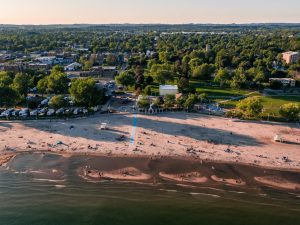
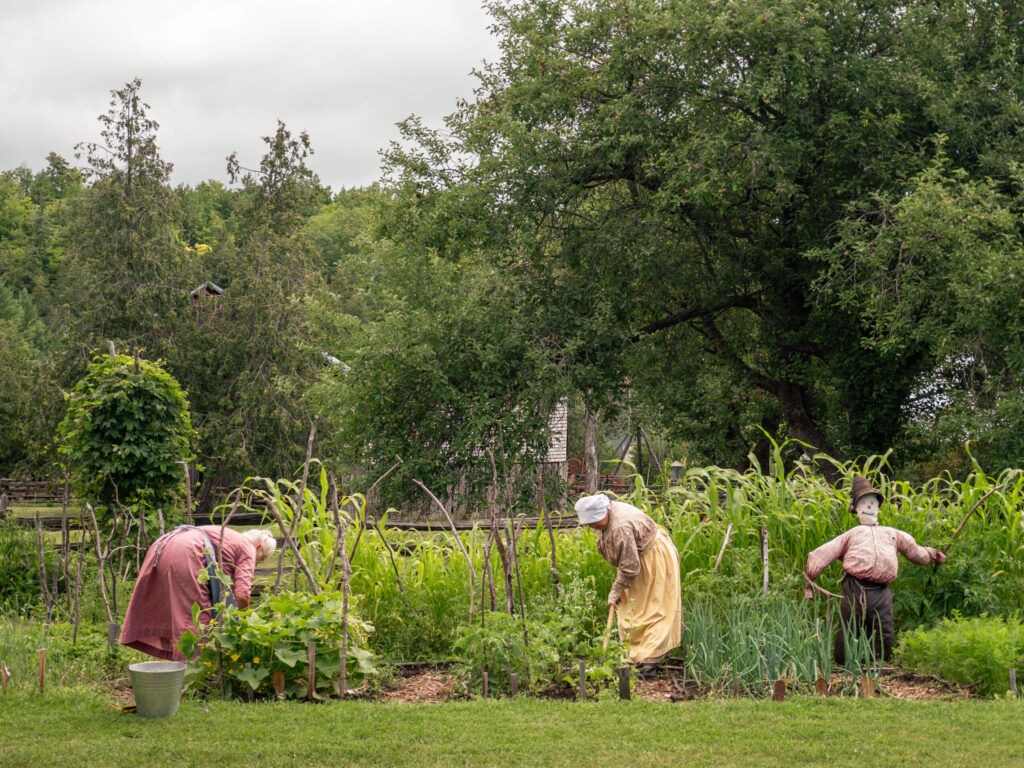
How do you imbue a bygone era with a sense of meaning and life? A convincing answer sits along the banks of the Indian River in Keene, Ontario. With over thirty historic and reproduction buildings populated by knowledgeable in-costume interpreters, Lang Pioneer Village Museum creates an immersive experience of Peterborough County in the 19th century.
“The cool thing about Lang is that not only do we represent a whole century in time, we’re showing what daily life was like for the average person,” says Elizabeth King, operations manager at Lang. “It helps people to connect to the history when they can actually see people living it and doing it and to get the opportunity to touch and smell and feel all of those stories unfold.”
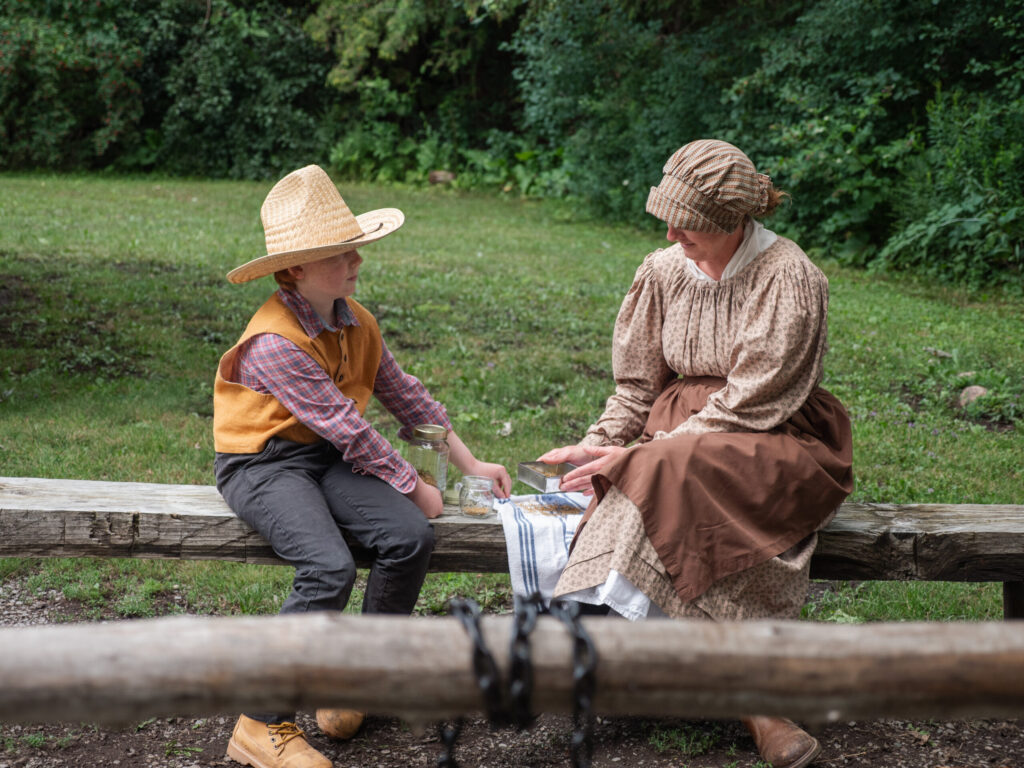
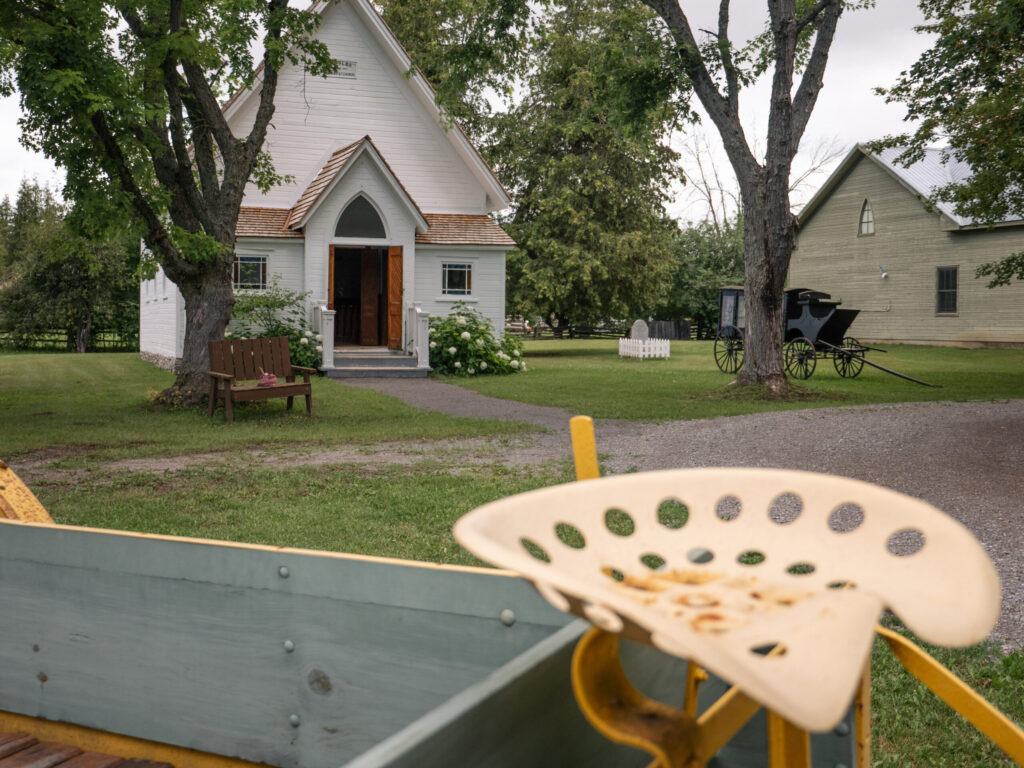
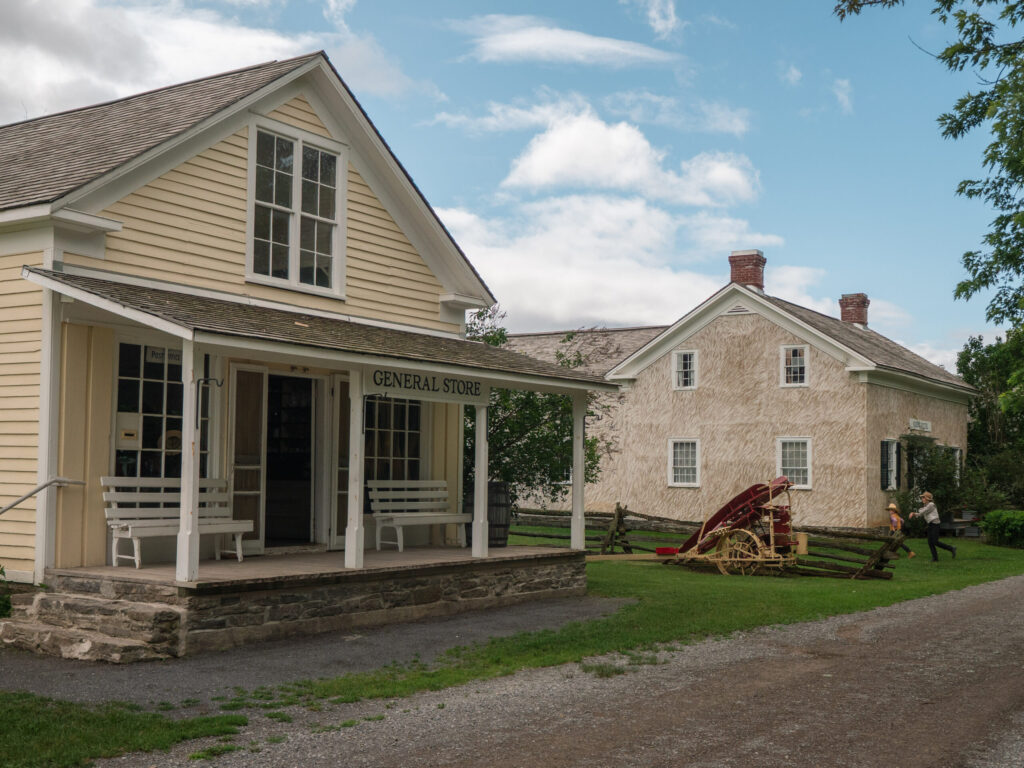
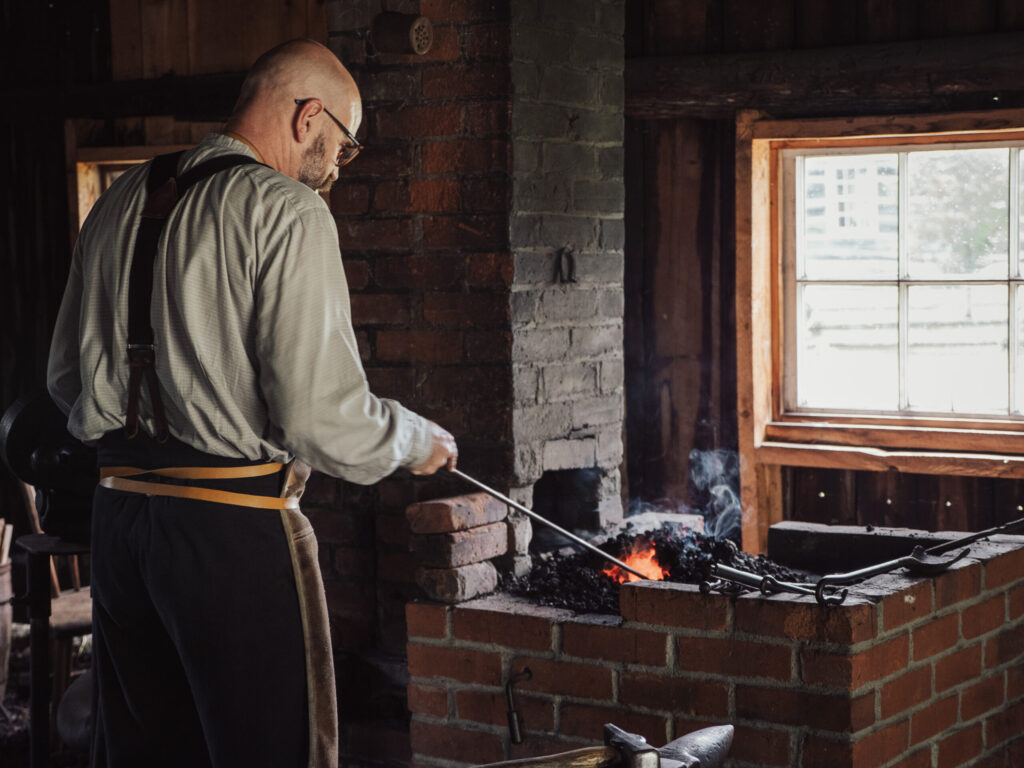
Every few steps offer another illustration of King’s point—smoke rising from a cooking fire, the ring of the blacksmith’s hammer, or a bite of fresh-baked apple cake. The variety of trades and lifestyles recreated adds remarkable depth to the experience. “We have a First Nations encampment, we have a church, we have businesses like a print shop, a blacksmith shop, a general store, a weaver shop,” King adds. “We also have municipal buildings, like our Douro Town Hall. And of course, there is the Lang Grist Mill, which is the only original building to the site.”
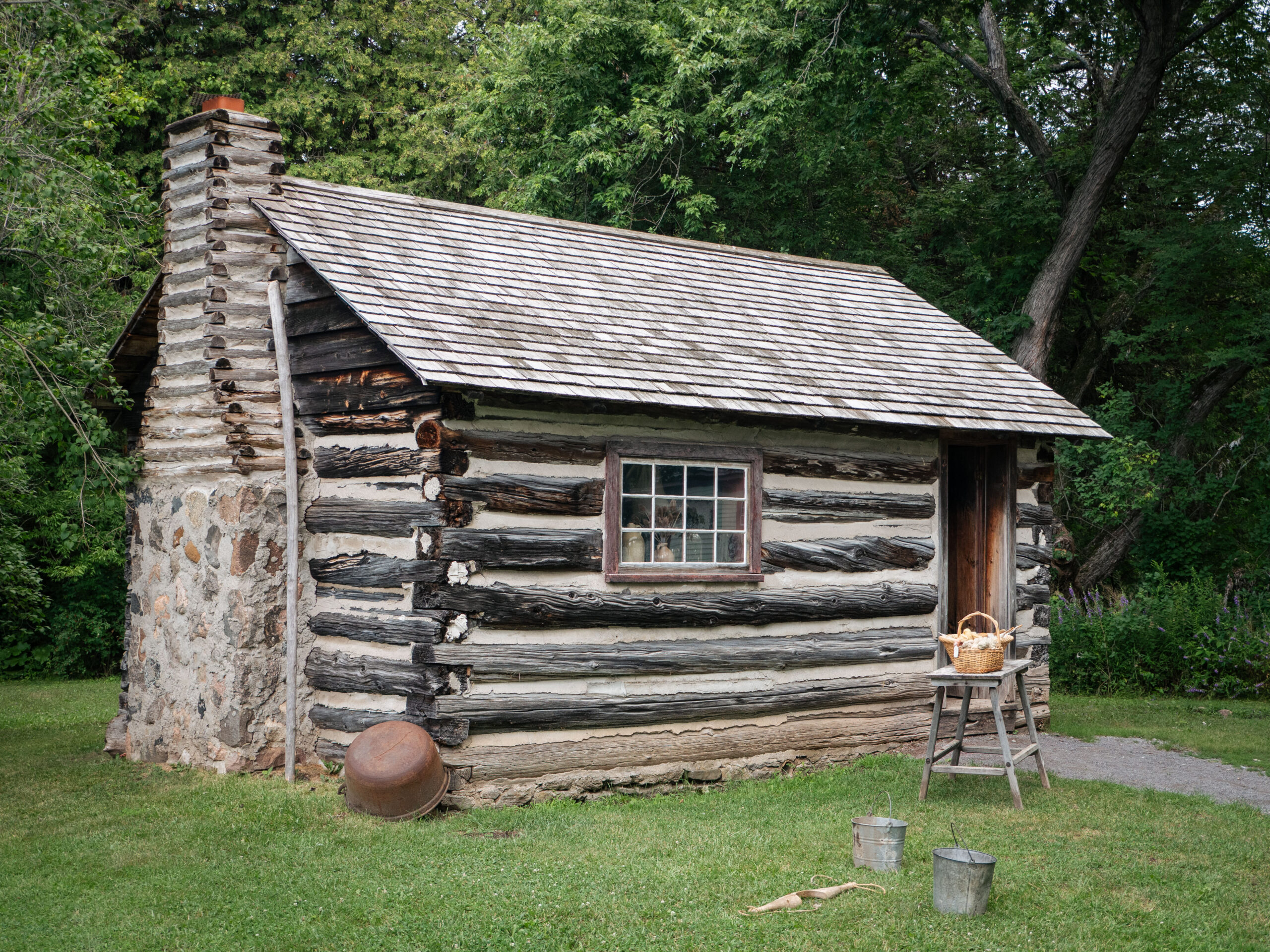
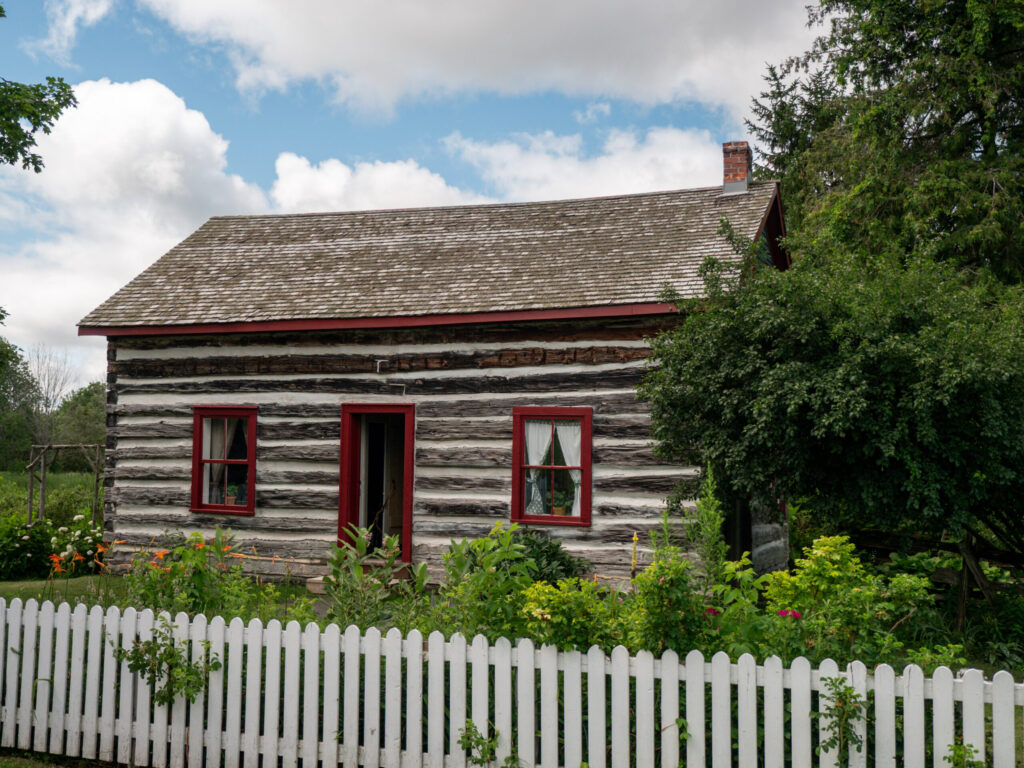
Most of the buildings on the grounds were brought from different sites around the county. Although the layout feels perfectly organic, its intentional design allowed for an educational opportunity. Selecting buildings and objects from a date range between 1825 and 1910 reveals the evolution of technology over the course of nearly a century. The David Fife cabin dates from 1825 and speaks to the need for new European arrivals to hit the ground running, since a simple, one-room space was all that time allowed before the coming of winter. The Peterborough County Agricultural Heritage Barn, on the other hand, reflects advances that were available by the turn of the century.
King’s personal favourite stop is the general store. Her career at Lang began there as an interpreter almost eighteen years ago, and she’s still finding fresh surprises. “It doesn’t matter how many times you’re in there, you can find something new or interesting to look at because the shelves are full,” she says. “There’s everything from textiles and fabrics to children’s toys, China, household instruments, medicines. There’s even a little post office in there.”
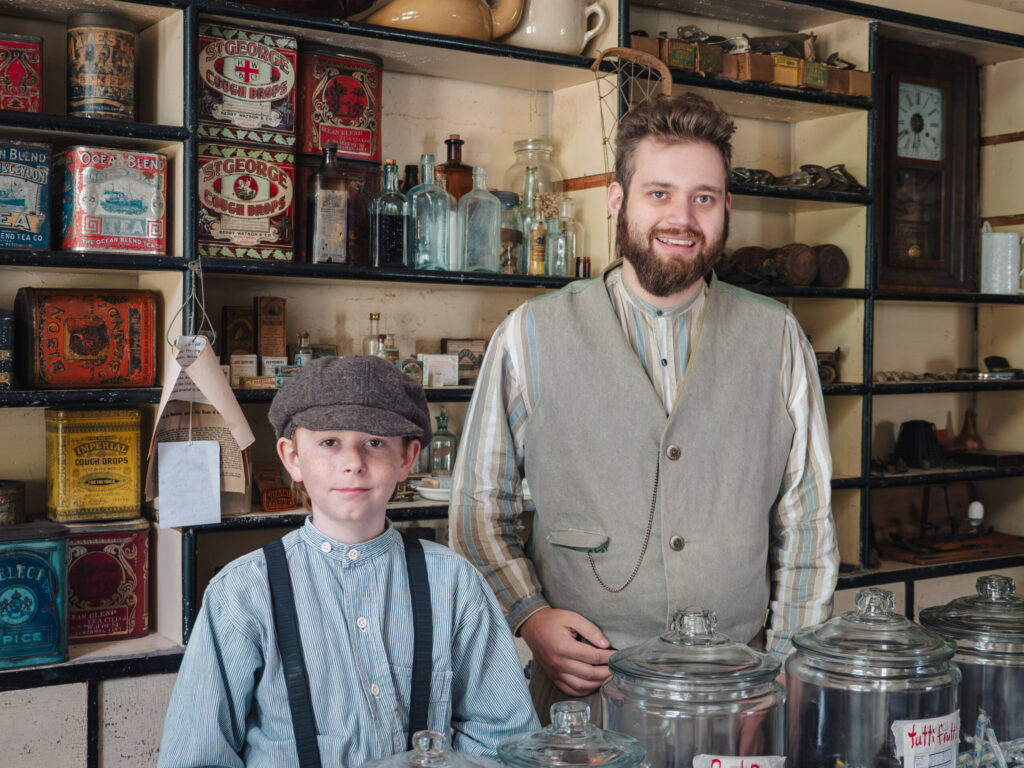
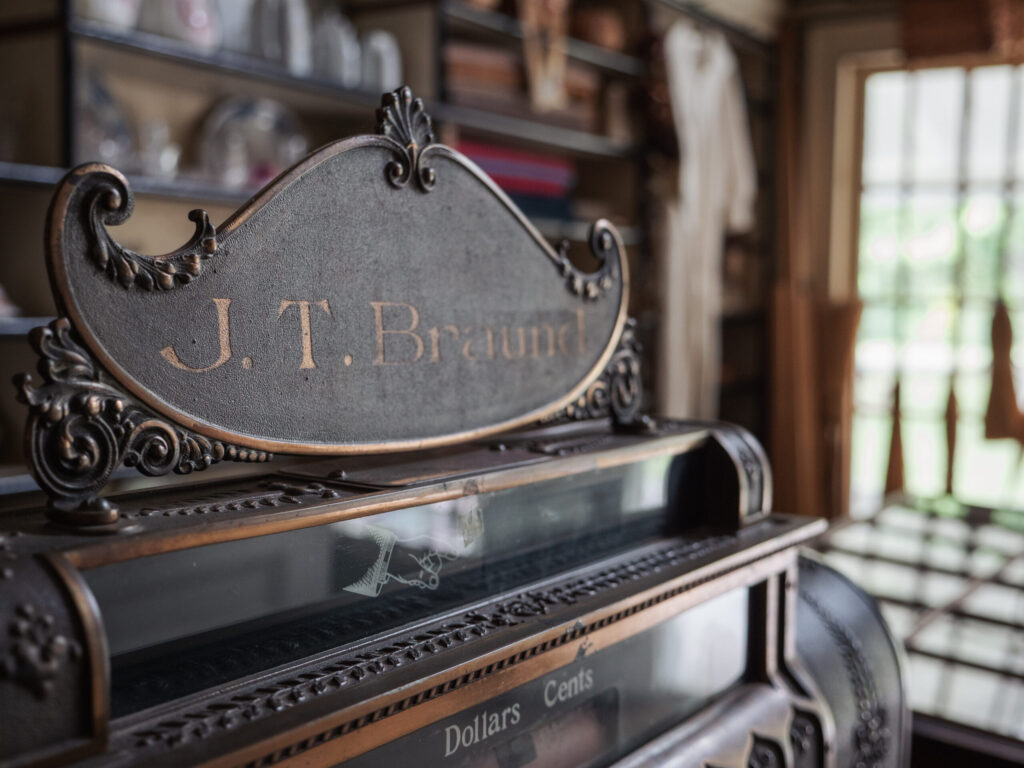
It’s not just the objects themselves that fascinate King, but the resonance they have to modern day visitors. Seeing that connection helps her understand history as a lived experience, much more than a collection of names and dates. “A lot of the things we still buy today, it just looks different for us. We go to a big box store, and their big box store was the general store.”
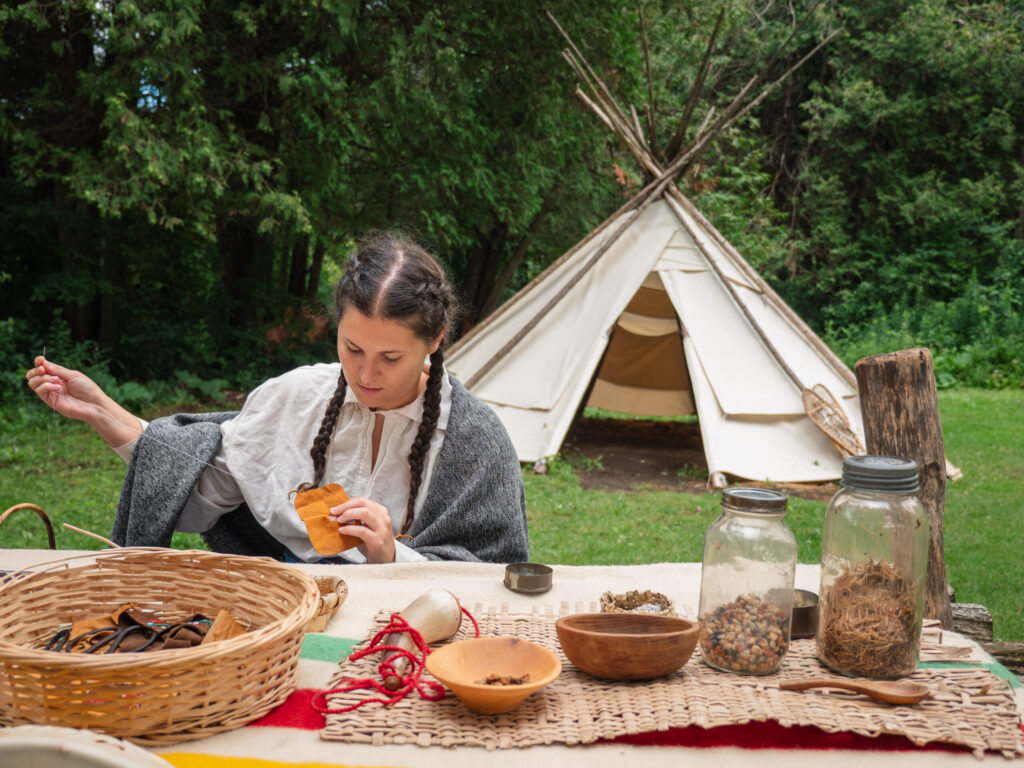
One aspect that King has seen change and improve in her time with the museum is Indigenous representation. Earlier in the museum’s history, a general acknowledgement of Indigenous presence was the extent of its coverage. Though still primarily focused on settler lifestyles, through education and consultation Lang developed Aabnaabin Camp, a recreation Michi Saagiig Anishnaabeg hunting or ricing camp from circa 1825. Staffed by a local First Nations person every summer, the camp is now part of the fabric of Lang. “It’s an active part of the village. You can’t do it without it,” says King.
Keeping the many facets of Lang working together harmoniously is no mean feat, and King credits the invaluable volunteer contributions for making it possible. “We have about 157 volunteers who, if we didn’t have them doing the front-facing stuff, doing the behind-the-scenes stuff, helping with the events, even helping with things like data entry for donations of artefacts, we couldn’t do it. We just couldn’t.”
Thematic and seasonal events are a key part of the Lang experience. The annual Father’s Day Smoke and Steam Show bills itself as “the Kawarthas’ original tractor show,” while the Transportation Day Car and Motorcycle Show in July showcases antique and classic cars. Apple Fest in September is a harvest-time tradition, and the All Hallows’ Eve event in October adds some spooky fun to the Lang formula. A Christmas Bazaar and Raffle in November and Christmas by Candlelight event in December round out the offerings.
Upcoming events are advertised on the official museum website, as well as its active Facebook, Instagram, and YouTube profiles. Events and group bookings offer a way to experience the museum from September 7 to December 31, after regular summer hours have ended.
Created as a centennial project in 1967, Lang itself is now something of a Peterborough tradition. King credits its longevity to the immersive quality that guests feel the minute they step through the gate: “People walk through our doors and they really do feel like the rest of the world falls away. They don’t have to worry about stress and modern things, and they just kind of relax into it, and it makes for happy visitors.”
Visit LangPioneerVillage.ca for more information